A Timeline for Following a Long-Running Debate
A timeline for following a long-running debate separates turning points, recurring events, and later interpretations so you can see what actually changed.
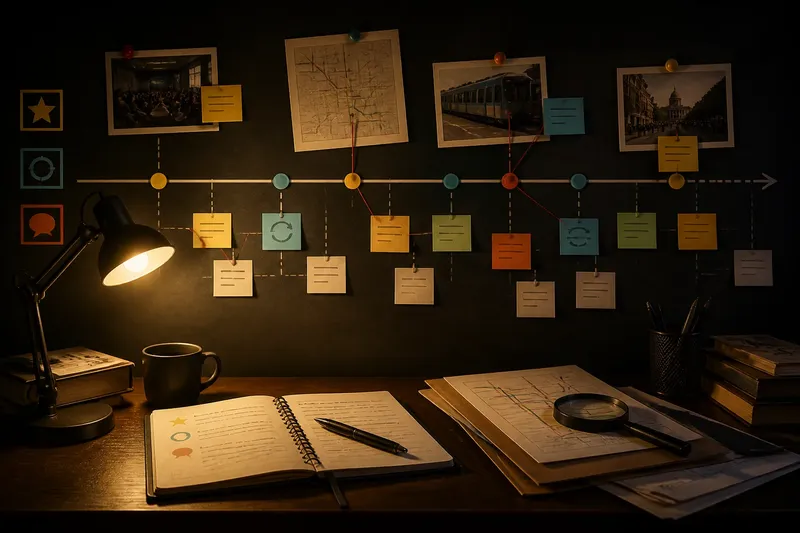
Which moment changed the course of a public debate, and which one only made the same argument louder? A timeline for following a long-running debate can help answer that, provided it separates turning points from recurring events and later interpretations. The aim is not to list everything that happened. It is to keep change visible without letting the latest account rewrite the earlier record.
Choose a timeline that matches the question you have
Start by deciding what you are trying to follow. An issue can have several timelines at once: a proposal may move through formal stages, public support may shift, and the language used to describe the problem may change. Mixing those strands into one running list can make unrelated events look like a single chain of cause and effect.
If you need to know what is happening next, build a forward-looking timeline around scheduled decisions, deadlines, hearings, votes, or reviews. Mark each item as planned, completed, postponed, or uncertain. That distinction matters because a scheduled event is evidence of an expected process, not proof that the process will happen as planned.
If you are trying to understand why the debate has taken its current shape, use a retrospective timeline. Include earlier events only when they help explain a change in the options under discussion, the people or institutions involved, or the claims now being made. A long list of background facts can feel thorough while leaving the central question untouched.
If the debate seems to return to the same point, keep a recurrence timeline. Track repeated events and arguments as separate entries rather than treating each appearance as a new turning point. This format suits issues with regular reports, annual decisions, recurring demonstrations, or repeated legislative attempts.
These formats can sit beside one another, but each should answer a different question. A calendar asks what may happen next; a retrospective asks what altered the debate; a recurrence record asks what keeps returning. Choose the one that fits your situation before adding entries.
Use turning points only when something changed
A turning point is an event after which the debate has a meaningfully different set of conditions. It might change what decision is available, who has authority to make it, what evidence is being considered, or which groups are affected. A dramatic announcement is not automatically a turning point; its consequences may become clear only later.
For each candidate, ask a plain question: what was possible, expected, or contested before this event, and what was different afterward? If the answer is only that more people discussed the issue, record the event as increased attention unless you can identify a concrete change in the debate itself.
Keep the event and its interpretation distinct. An entry might say that a committee released a proposal, followed by a separate note that commentators described it as a major shift. The first is an event to verify; the second is an interpretation to attribute. Combining them gives the interpretation the appearance of a settled fact.
Say you are following a city debate over a proposed transit route. The release of a revised map could count as a turning point if it changes which neighborhoods are affected or what decision officials must make. A lively meeting about the same map may be worth recording, but if no options, commitments, or participants change, it is better marked as a notable discussion than as a decisive shift.
Keep recurring events from masquerading as change
Recurring events deserve space because repetition can show persistence, pressure, or a routine part of the process. Their recurrence alone does not establish that the issue is progressing or worsening. Treat each occurrence as an entry with its own date and observable detail, then compare it with earlier entries.
Use a stable label for the recurring event, such as “annual review,” “scheduled hearing,” or “new filing,” while noting what differs each time. Has the scope changed? Did the decision-maker respond? Was a deadline moved, a proposal revised, or a new question introduced? If nothing material differs, say so rather than dressing repetition as a breakthrough.
A simple analogy helps: a calendar is like a kitchen timer, which tells you when something is due, while a timeline is more like a marked-up map, which shows how the route changed. The timer matters, but it cannot tell you whether the destination or available path has shifted.
Recurring events may also be evidence of a turning point in the aggregate, even when no single occurrence qualifies. For example, repeated delays could eventually alter the expected schedule or narrow the available choices. Record the individual delays first; describe the cumulative effect only when the change is observable, and identify it as an interpretation if reasonable readers could disagree.
Choose a record that fits your available time
If you are checking the issue occasionally, keep a short event log with the date, event, status, and why it might matter. One line per event is enough at first. Add a link or source note so you can return to the underlying material instead of relying on your memory of a headline.
If you follow the issue regularly, use a table with distinct fields for the event, the change it may represent, and the later interpretation. A spreadsheet, notes app, or plain document will work. The tool matters less than the separation: a claim about what happened should not quietly become a claim about what it means.
If several strands are moving at once, make parallel timelines rather than squeezing every development into one sequence. You might track formal decisions in one column and public responses in another. This makes it easier to see whether the strands actually connect or merely occur around the same time.
For a brief, article, or meeting preparation, use a selective timeline with only the events needed to answer the immediate question. Keep an “omitted but relevant” note for developments you may need to revisit. Selection is not a defect; it becomes a problem only when the choice of what to leave out hides a change that would alter the reader’s understanding.
What should count as an entry?
Should every public statement go on the timeline?
No. Include a statement when it changes a commitment, introduces a claim that later shapes the debate, or helps explain a subsequent decision. Otherwise, save it in notes or leave it out; a timeline is not a transcript of attention.
How should I mark an event whose effects are unclear?
Record the event in neutral terms and label its significance as uncertain or provisional. Revisit it when later decisions or responses make the consequences easier to assess, without changing the original description.
How can I show that the same event is described differently?
Keep the event description separate from the competing accounts, and attribute each account to its speaker or source. If the disagreement concerns the event itself, note what is established and what remains disputed rather than choosing a label by tone.
When should I stop adding entries?
Stop when a new item no longer helps answer the question the timeline was built for. If the issue changes direction, revise the question or start a distinct strand instead of adding detail indefinitely.
Separate the event from what people later say it meant
Later interpretations belong in a timeline because public understanding can change after the event. A decision may first be described as temporary, then treated as a precedent; a forecast may later be recast as a warning. These are developments in interpretation, not changes to the original event.
Preserve the sequence. Note when an interpretation appeared, who advanced it, and what new information or decision it refers to. Avoid replacing an earlier description with the later one. Keeping both lets you see how the account developed and whether the later reading rests on new evidence or a changed argument.
Use cautious language for causal claims. “Followed by” describes order; “prompted” or “led to” asserts a relationship that needs support. If the connection is contested, record the event and the claim about its effect separately. This small distinction prevents chronology from doing the work of evidence.
Keep the timeline useful as the debate moves
Review entries when a scheduled decision passes, a proposal changes, or a new account reframes an earlier event. Mark corrections visibly and preserve the earlier wording when the change affects interpretation. A clear record can show that your understanding changed without pretending the record itself was always complete.
Use the timeline for the job it can do: show sequence, recurrence, and identifiable change. It cannot settle every argument over why a development happened or what it should mean. For a timeline for following a long-running debate, that boundary is useful: it leaves room to distinguish what occurred from what people make of it, while keeping the next relevant change in view.